- After three years of drought and high temperatures, L’Olivera increases the volume of grapes brought into the winery by 30%.
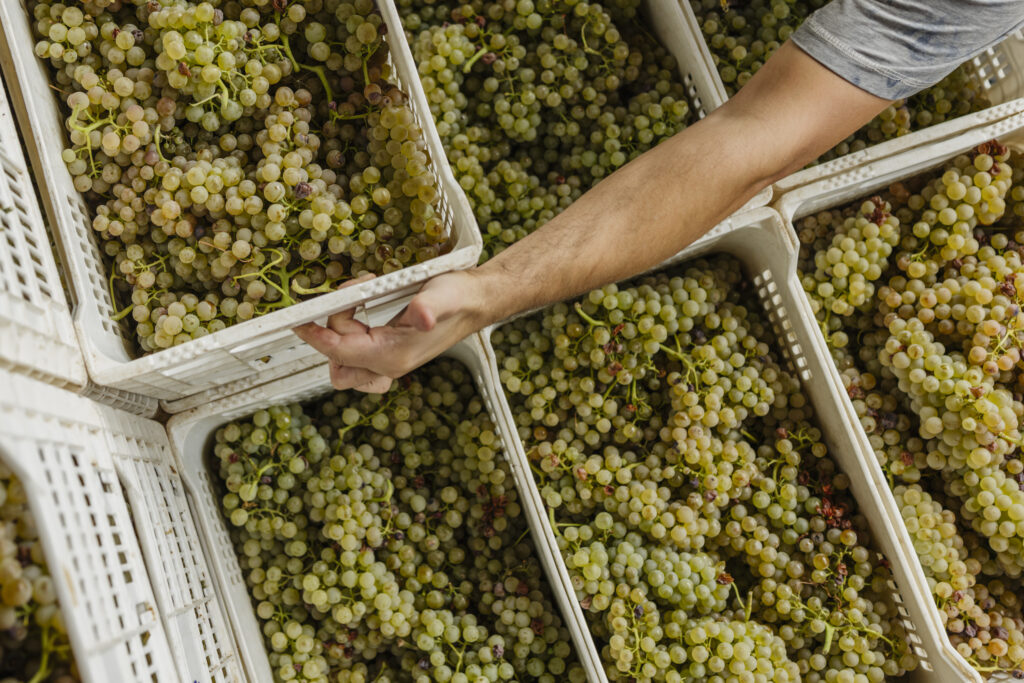
On August 19, we kicked off the 2025 harvest, both in Vallbona de les Monges and in the peri-urban vineyards of the Sabadell Agricultural Park. This summer’s latest heatwave forced us to start the harvest two weeks earlier than the traditional schedule. On the other hand, we achieved a significant increase in the volume of grapes brought into the winery, especially for white and sparkling wines. We harvested 210,000 kg of grapes, 30% more than the 163,000 kg harvested in 2024.
After three years of drought, we were expecting a normal ripening season. However, the heatwaves at the end of July, with temperatures exceeding 40°C, affected the grapes’ usual ripening process. According to data from IRTA, the harvest currently takes place around fifteen days earlier than it did fifty years ago, and projections indicate that over the course of the 21st century it could move forward by as much as 2 to 2.5 months. “We are facing an oenological challenge. Climate change forces us to bring the harvest forward to avoid excessive alcohol levels. Heat accelerates photosynthesis and the accumulation of sugars in the grapes,” explains Pau Moragas, Head of Production.
In response to this scenario, we have long been working to ensure the sustainability of dryland farming, through trials with cover crops and the introduction of recovered drought-resistant varieties such as Trobat. We do so through a research project with the University of Lleida and INCAVI: “Research into historical grape varieties from the lands of Lleida is a strategic field for the viticulture of the future, and carrying it out within the framework of the designation of origin creates a positive shared effort,” adds Moragas.
A harvest with ecological and social values
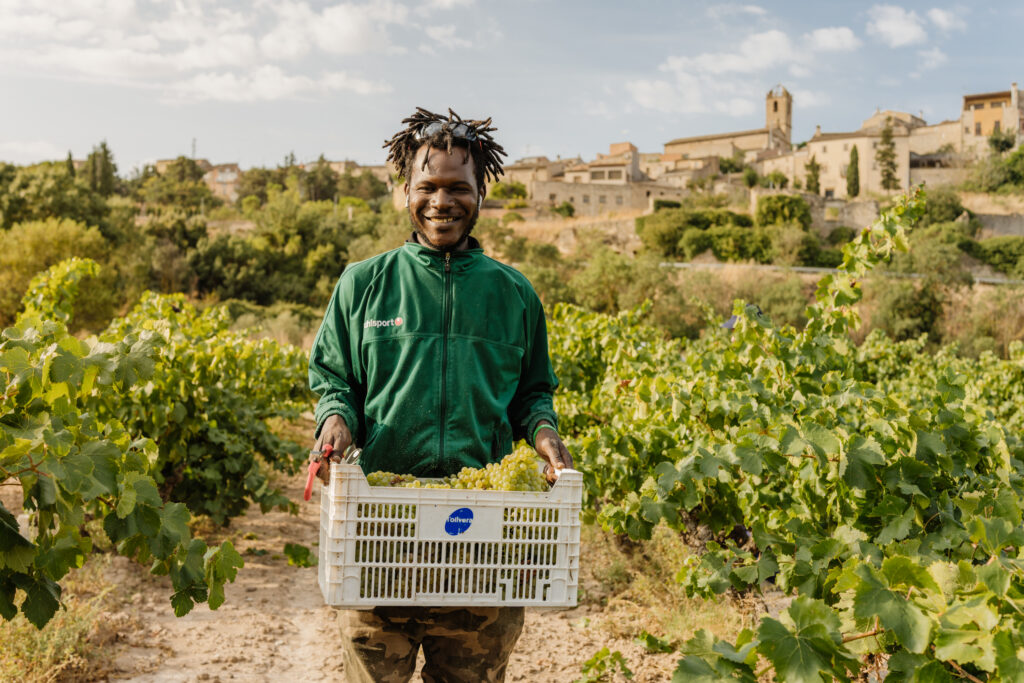
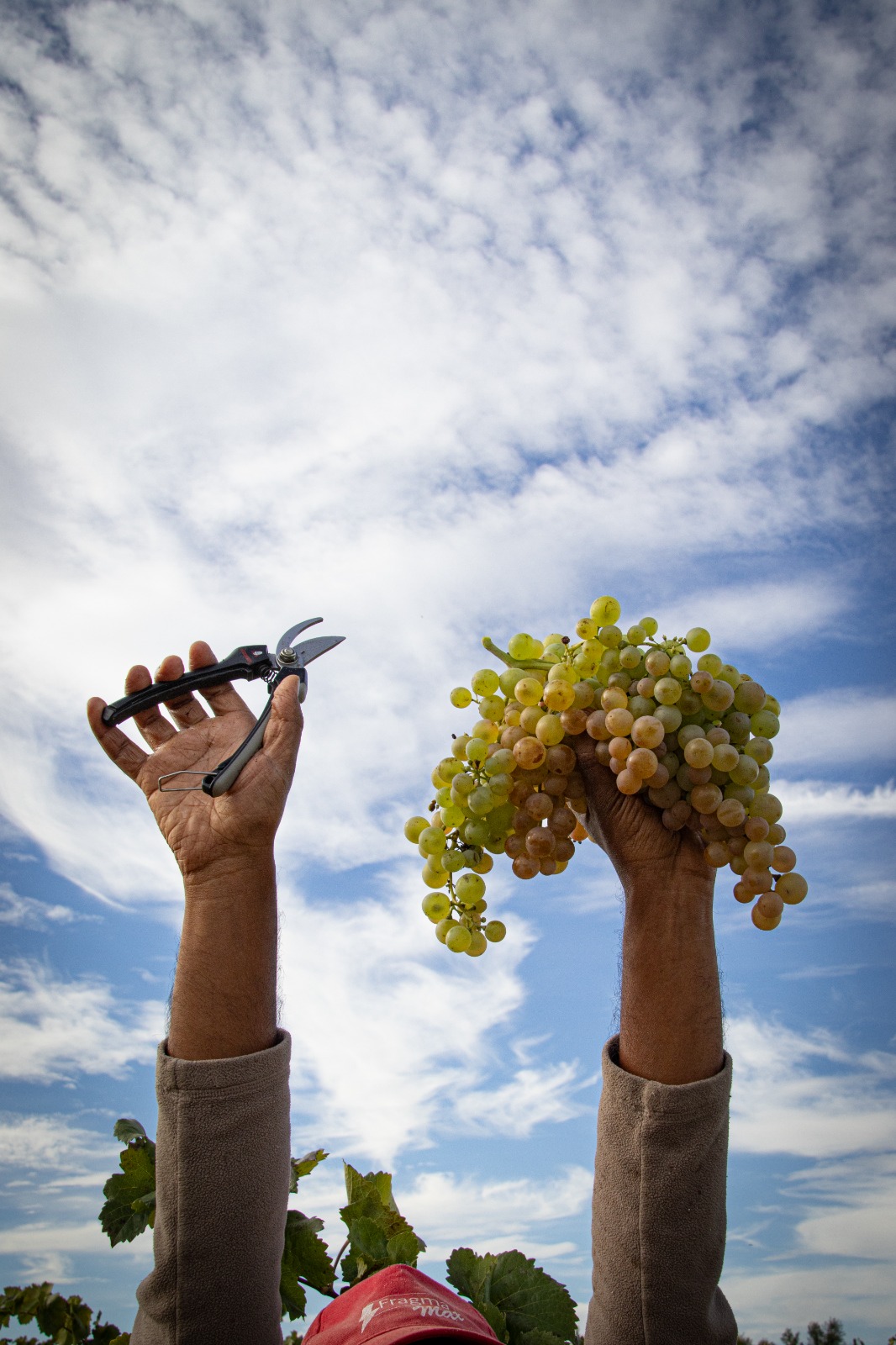
We have faced not only a climate-related challenge but also an organisational one, as for more than 50 years we have harvested all grapes by hand. “Manual harvesting is more delicate, but also more respectful of the land: it takes better care of the vine and prevents oxidation of the grapes so they arrive at the winery in optimal condition,” Moragas emphasises.
In this 37th edition of the harvest, around 35 people took part, maintaining our social vocation: “We believe in human-scale work that places people at the centre; that is why we are committed to creating social inclusion pathways throughout the entire winemaking process,” Moragas concludes.
In addition, as every year, we welcomed students from the University of the Republic (Uruguay) in Montevideo and from Chapingo Autonomous University in Mexico to show them the harvest campaign.
With the support of: